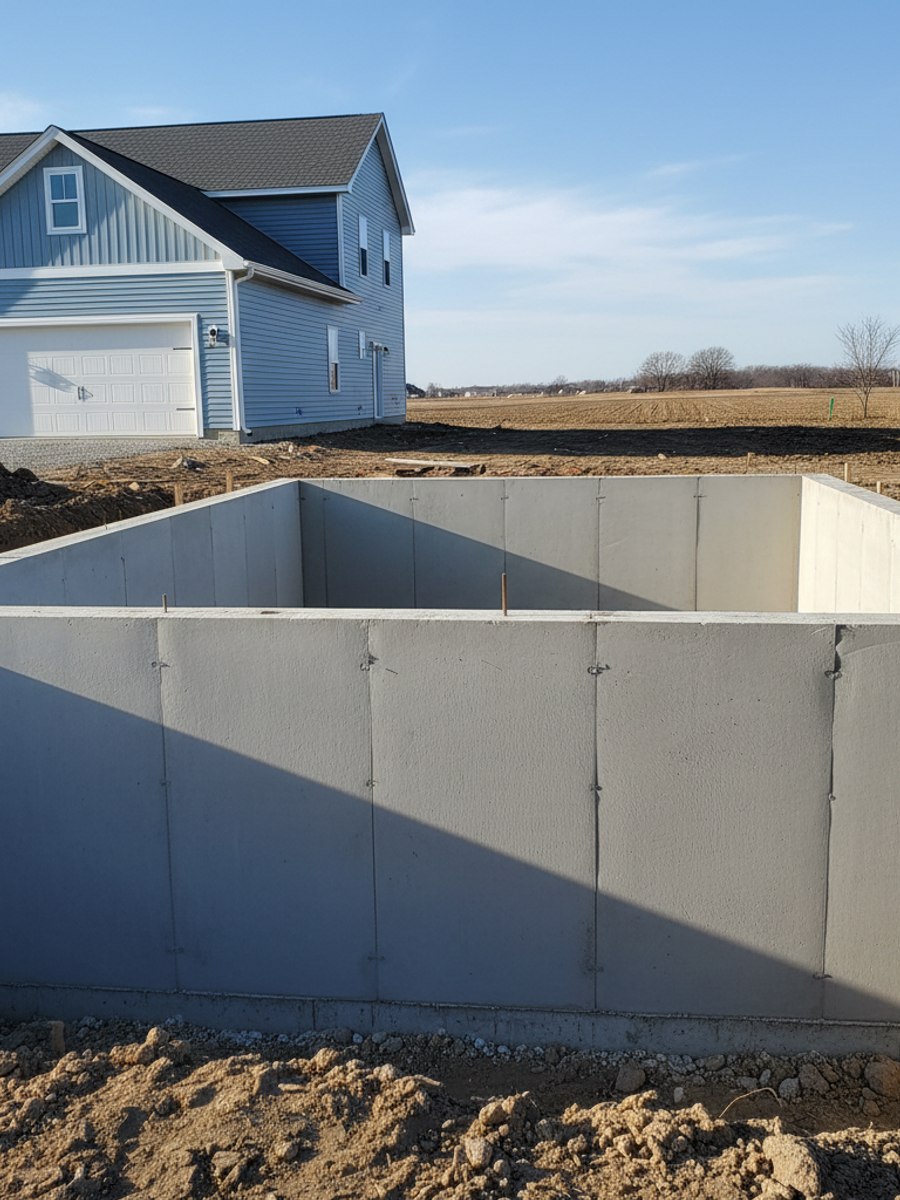
People ask us when the "concrete season" starts and ends in Elkhart, as if there's a switch that flips. There isn't, but there are real windows where concrete sets up the way it's supposed to and real windows where you're fighting the weather the whole time. Knowing the difference saves you from cracks, scaling, and a driveway that never quite looks right.
Concrete isn't a material that just dries. It's a chemical reaction between cement and water called hydration, and that reaction needs a temperature range to behave. Too cold and it slows down or stops before the mix gains enough strength. Too hot and it can race ahead of the finishing crew, setting on the surface before the rest of the slab catches up. Elkhart gets both extremes in the same calendar year, sometimes six weeks apart.
What a northern Indiana winter does to fresh concrete
Elkhart sits close enough to Lake Michigan to catch lake effect snow, and that means a longer stretch of genuinely cold, wet weather than towns further south in the state. Freezing nights can start as early as late October and hang around into April some years. Fresh concrete that freezes before it reaches roughly 500 psi can suffer permanent damage, scaling on the surface, popouts, sometimes full internal cracking you won't see until the first thaw. That strength usually takes 24 to 48 hours to reach under good conditions. In a cold snap it takes longer, which is exactly when you don't have the time to spare.
We can still pour in winter. Contractors do it with heated enclosures, insulated blankets, and accelerator admixtures that speed up the early strength gain. It costs more and it takes more babysitting on our end. For a homeowner who isn't in a rush, there's rarely a reason to pay that premium when a better window is a few weeks away.
Spring thaw is trickier than the calendar suggests
Once the ground stops freezing at night, people assume it's go-time. Not quite. Elkhart County soil is a mix of glacial till, sandy loam in some pockets and heavier clay in others, and both types hold a lot of water after snowmelt. A subgrade that's still saturated won't compact properly no matter how many passes you make with a plate compactor. Pour on top of soft, wet ground and you're setting yourself up for settling cracks a year or two down the road, not a failure in the concrete itself but in what's underneath it.
Frost heave is the other spring problem. Ground that froze deep over the winter thaws from the top down, so there can still be a frozen layer a foot or more below the surface even when the top looks dry. We check subgrade conditions before we commit to a pour date, not just the forecast.
Summer heat changes how fast you have to work
July and August in Elkhart regularly hit the mid-80s with humidity that makes it feel hotter, and that combination shortens the working time on a slab. Water evaporates off the surface faster than it can bleed up from inside the concrete, and you get a problem called plastic shrinkage cracking, thin surface cracks that show up within hours of the pour. Finishing crews deal with this by pouring early in the morning, using evaporation retardants, and sometimes fogging the surface with water during finishing.
Hot weather concrete also cures faster on the outside than the inside, which isn't always a good thing. Curing blankets or a sprayed-on curing compound slow that surface drying down so the slab gains strength evenly. Skip that step on a 90-degree day and you can end up with a driveway that looks fine for a season and starts crazing the next.
Why fall is usually the sweet spot
September and most of October give you daytime temperatures in the 60s and 70s, nights that stay above freezing, and lower humidity than August. That's close to ideal for hydration, slow enough to finish properly, fast enough that you're not waiting around. The ground has also had all summer to dry out and settle, so compaction is more predictable than it is in April.
It's not a guarantee. Fall also brings the first real risk of an early frost, so a late-October pour needs a closer eye on the ten-day forecast than one in mid-September. We've poured plenty of driveways and patios into early November without trouble, as long as we can cover the slab and the overnight lows aren't dropping into the 20s.
Permits, inspections, and scheduling around them
Most jobs that touch a sidewalk, a driveway apron at the street, or a slab foundation need a permit through the City of Elkhart or Elkhart County, depending on where the lot sits. Sidewalk and apron work in the public right-of-way usually goes through the city engineering department separately from a standard building permit. Inspectors typically want to see the subgrade and any rebar or wire mesh before the pour, not after, so scheduling matters as much for the paperwork as it does for the weather. A footing or foundation slab may also need a setback check against the property line, especially on older lots near downtown Elkhart where additions and garages have been built over the decades without always matching the original survey. Newer subdivisions out toward Dunlap or Osolo Township tend to have cleaner records and more predictable fill soil, since it was placed and compacted as part of the original development rather than built up piecemeal over 70 years.
If you're planning a project, the honest answer is that September through early October gives you the fewest variables to manage. Spring can work if the ground has actually dried out. Summer works if you're willing to pour early in the day and pay attention to curing. Winter is possible but it's not where we'd put your money without a good reason. If you want a straight answer on timing for your specific lot and soil, that's a conversation worth having before you pick a date, not after. You can see the kind of work we handle through the year at Horizon Concrete.